• Welcome
  • Conservation
  • Facilitation
  • PME
  • Books
    • The Big Book of EMFs
  • Blog
  • Testimonials
  • Contact Me
InSpiral Pathways
Aligning passion & process to facilitate positive change 
in international, organisational, & personal development

Lies, Damn Lies and (Dubious) Statistics: Parliamentary candidates provide dodgy data massages in Weston-super-Mare

3/5/2015

0 Comments

 
Picture
The title of this blog posting is a variation of one of my least favourite quotes – there are lies, damned lies, and statistics. I passionately believe that statistics, used honestly, help us understand the world, thus enabling us to change it for the better. The “lies” quote, in its various guises, is often trotted out by two kinds of people - those with a poor grasp of the power of statistics, and those who seek to cause confusion among those with a poor grasp of the power of statistics. Members of the second group include the tobacco apologists of yesteryear and the so-called climate change sceptics of today. And of course, we cannot forget that much maligned group, the politicians.

Politicians are often accused of manipulating statistics for their own ends; an accusation few of them would deny if they were being really honest. But in many cases, the “lies” that people refer to are lies of omission rather than flagrant falsehoods. Unlike a lot of people, I have quite a lot of respect for most politicians in Britain. This could be because I work in many of countries where the politics is a lot dirtier than it is over here, at least on the surface. So, perhaps naively, I trust British politicians to be, at worst, somewhat economical with the truth.

But en route to the recycling bin the other day, I was struck by what appeared to be blatant lies in the election leaflets of the Conservative and Labour Parties for our constituency of Weston-super-Mare. Both parties produced bar charts based on the results of local and European elections in the constituency since 2010 to justify voting for them - the charts are reproduced in the above infographic. The Tories and Labour used the charts to portray it as a two horse race between the major parties. In other words, a vote for any of the other parties would be wasted – “Only John Penrose can stop Ed Miliband and Ed Balls in Weston” proclaimed the Conservatives, with Labour firmly stating “If you want the Tories out of power locally and nationally, Labour is the only choice for you.” Both assertions may well turn out to be true but that is not the issue I am writing about in this blog.

At first glance I took the bar charts as being authentic reflections of the percentage voting figures they were meant to portray; but then I did a double-take when I realised that, in both cases, the size of the bars was way out of line with the percentages. Either the charts had been produced by somebody who was incapable of pre-GCSE maths, or they had been deliberately manipulated to suit the agendas of the respective parties.

The Tory leaflet portrayed Labour as being clear in second place with the LibDems a distant third and UKIP hard on their heels in fourth. But in fact the LibDems were only 2% behind Labour and UKIP were 13% behind the LibDems. The charts from the Labour leaflet portrayed a similar picture. In the Labour chart the LibDem vote was 18% and in the Conservative chart it was 20% but, to be charitable, this could be because different methods were used to calculate the figures because of confounding factors such as boundary changes.

So what conclusions can I draw from this? If it was a cock-up then it does not reflect well on the competence of these people who seek to lead the country in this information age. But we all make mistakes. So it should just be a question of the candidates - John Penrose for the Conservatives and Tim Taylor for Labour - holding up their hands and apologising for the human errors that were made. If the charts were deliberately exaggerated then it is a much more serious matter. I’m not an expert but surely that kind of behaviour is illegal. If it is not, then there is a loophole that is in urgent need of closing. 

We keep hearing that trust for politicians in this country is at an all-time low. If facts are being routinely falsified then I am ready to reluctantly agree that this impression is well founded.

0 Comments

Banish your fear of sandwiches using Appreciative Inquiry

11/1/2015

0 Comments

 
Picture
Images: Scared child by D Sharon Pruitt (CC BY-2.0.) and A peanut butter and jelly sandwich… (Public Domain)
On Friday 4th of October 2013 I led a workshop to introduce Appreciative Inquiry (AI) to the Centre for Pollination Studies and Parthib Basu’s Ecological Research Unit in the Department of Zoology, University of Calcutta. AI is being used by Parthib’s group to help to enhance their learning, project planning, monitoring and evaluation and to banish practices based on that often unpalatable mix of positive and negative statements or questions sometimes known as “the complement sandwich.”

The development of CPS’s participatory approach to planning, monitoring and evaluation 
It has been a pleasure to be able to work with the CPS team to help them develop their planning, monitoring and evaluation (PME) practices. In November 2012 we put together a PME system for the CPS based on the Project logical framework approach and Outcome mapping (OM). OM is a participatory PME approach that explicitly acknowledges the fact that any intervention is embedded in a complex reality comprising of multiple actors and factors, only some of which are under the control of the project or programme. For more details of OM’s 12-step process you can download the Outcome Mapping Facilitation Manual. If you want something shorter, a 4-page summary of OM can be downloaded from the Outcome Mapping Learning Community.

OM’s focus is on a project or programme’s direct partners in its sphere of influence (those individuals or organisations with which the programme interacts directly and anticipates opportunities for change) as opposed to its spheres of control (those who work full-time for the programme), and concern (stakeholders who are still of interest to the programme but are beyond its direct influence). OM provides the “who” in the logical sequence between activities (what the project does) and outcomes (changes to which the project contributes).
Picture
Stakeholder Circles: A programme cannot control change, it can only influence and contribute to changes at the level of its direct partners
Picture
The International development tango
Organisational Practices and the fear of sandwiches
Anot
her aspect of OM that I love is the fact that it includes a step called organisational practices. By including this step the developers of OM have made explicit the fact that the organisation is not some kind of omniscient entity that dispenses its bounty upon its chosen beneficiaries while itself remaining untouched. [a quick aside: is it just me or does the term “beneficiaries” sound a little bit patronising?]. Instead it is recognised that learning is not a one-way street and organisations need to grow and develop if they are to thrive in this ever-changing world. The OM manual lists the following eight practices that can help an organisation maintain its relevance and vitality:
Picture
Given time constraints we did not look at the CPS organisational practices when developing the PME system in November 2012 but we all agreed it was an important issue which we needed to address at some point. I was keen but somehow the step as outlined in the OM manual didn’t entirely resonate with me.

My concern was that without careful planning we could inadvertently use the eight practices as a rope of (k)nots with which to beat those in the organisation: what we are not doing to prospecting for new ideas, what we are not doing to share our best wisdom with the world, what we are not doing to remain innovative, etc. My fears may have been unjustified but my mind kept conjuring up images of the stereotypical employee performance appraisal interview. I am sure that everyone is familiar with the bitter taste left by the “compliment sandwich”, a critical comment or question between two positives, that is invariably served up on such occasions. What if there was a method of organising such reviews which ensured that the tasty bread in the sandwich was not tainted by a noxious filling while at the same time not producing something bland or sickly sweet?

Appreciative Inquiry to the rescue
Step forward Appreciative Inquiry (AI), an organisational development paradigm that focuses on what is working to generate more of what you want instead of concentrating on what is broken in order to fix it.   In our meeting in November 2012, we felt that AI could be the ideal vehicle to address CPS’s organisational practices - by building upon the already substantial strengths and achievements of the group.

The first thing to establish was whether AI was right for the CPS. This we did through a three hour workshop in which I introduced the principles of AI to the Ecological Research Unit. You can download 
the workshop presentation from Slideshare.

We focused the majority of the session on some of the key principles underpinning AI. Several of them are based on those you can find in the text books and the valuable resources that are posted on the Appreciative Inquiry Commons. For example, what you focus on expands, Individuals give events their meaning, and words create worlds.

But I also decided to highlight a question that I have yet to encounter in the AI literature – why are we programmed to pay attention to the negative aspects of a situation? (our inherent negative bias). In a nutshell this is because of the evolutionary imperative to respond rapidly to danger – the familiar fight, flight or freeze response that allowed our ancestors to survive long enough to become our ancestors. Nowadays the majority of us don’t face tigers in our daily lives but our reactive response can still be easily triggered by the paper tigers that apparently threaten us in our daily lives, such as the audiences who question us, the bosses who appraise us, the progeny who disobey us, the friends who ignore us, and even the anonymous drivers who disrespect us.
Picture
I focused on our negativity bias for three reasons:

Firstly, to emphasise that we shouldn’t beat ourselves up about our negative feelings - they are normal. I have always been a believer in the power of positive thinking but every silver lining has a cloud. My “positivity” has sometimes manifested itself as denial – a conscious effort to keep my subconscious mind and endocrine system in line. Denial of my own negative feelings could easily trap me in a double bind – feeling bad about some everyday thing and on top of that, feeling bad about the fact that I was feeling bad! An understanding of the evolutionary reasons for the reactive response can, at the very least, limit you to a single dose of bad feelings.

Secondly, to introduce the fact that AI is not mindless happy talk, denial or problem avoidance but that it could become so if we are not careful. Every situation has positive and negative aspects. AI is about seeing the whole picture – both the positive and negative. However, the dominant paradigm in the world today reflects our negative bias (if you don’t believe me just watch any news bulletin for more than ten minutes or consult an elementary psychology textbook and search for the section on happiness); so AI trains us to look for the positive aspects of all situations, even those that could be deemed to be overwhelmingly negative. I develop this theme further in the blog postings: Appreciative Inquiry - Denial by any other name? and How I messed up my daily gratitude practice - Walking the tightrope between expressing appreciation and kidding ourselves.

And finally, (and now for the good news) to set the scene for a discussion on ways in which AI and related approaches can help us to transcend our programming by exercising our “appreciative muscles”. There are many ways of doing this, the following six of which we discussed in the workshop:
  1. Practicing gratitude
  2. Asking appreciative questions
  3. Observing the feelings and thoughts that come to you
  4. Cultivating stillness
  5. Embracing uncertainty
  6. Being of service
Asking appreciative questions is at the heart of AI, and in this part of the workshop the participants paired up to conduct “appreciative interviews”, asking questions about times when people experienced things working at their best. The appreciative interview is a cornerstone of AI. The interviews comprised of a number of questions such as:
Picture
Picture
The Appreciative Interview: Parthib Basu’s research group getting fully involved in the Appreciative Inquiry process
In a typical AI workshop you would devote 60-90 minutes to these interviews. We only had half an hour but the process was empowering nonetheless.

The results of the fourteen interviews were summarised in this word cloud which at a glance manages to capture the essence of much of the good work that the CPS is doing.
Picture
 CPS Wordcloud: Produced from the 14 appreciative interviews conducted at the CPS AI workshop in October 2013
Following the appreciative interviews, we looked at the AI 4-d cycle; the model that is typically applied when AI is used to address an entity, topic or process. This cycle begins with the definition of an affirmative topic such as developing inspiring and appreciative leadership, creating vibrant communities or embodying exceptional customer service. It then comprises of the following steps: discovery => dream => design => delivery. Although presented as a linear sequence, the reality is that the steps are iterative and interacting and form part of the larger whole.
Picture
Appreciative Inquiry's core processes as part of the 4 or 5-d cycle. It is also often referred to as the 5-d cycle if you include “define” (choose an affirmative topic) as the first d.
Appreciative Inquiry's core processes as part of the 4-d cycle.  Some potential ways in which AI could be used to help make the CPS even more effective were listed in a quick group brainstorm. The following were among the responses:
  1. Exploring each other’s thoughts
  2. Enhancing group work and meetings in general
  3. Finding common ground
  4. Sharing our optimism
  5. Daring to share
  6. Providing a practical approaches to problem solving
  7. Enhancing interrelationships
  8. To become more positive
  9. Discovering the virtues and strengths of the group
  10. Making the best use of everybody’s strengths for the good of the group
  11. Delivering on  our mission
  12. Helping the CPS to grow
  13. Catalysing a sustainable approach to change and change management
The above brainstorm and subsequent informal discussions testified to the positive energy that the introduction of AI concepts helped to catalyse in the members of the Ecological Research Unit.

Barbara Smith, joint CPS Director, made an off the cuff remark that succinctly summarised the power of the AI paradigm:

“Appreciative Inquiry - It’s a mind flip”

Acknowledgement
The work was undertaken under the UK’s Department for Environment, Food and Rural Affairs (defra) Darwin initiative project:
Enhancing the relationship between people and pollinators in Eastern India (Ref: 19024) led by Barbara Smith of the Game & Wildlife Conservation Trust (GWCT) and Parthib Basu of the University of Calcutta.
0 Comments

Ice Bucket Reflections: Living with Motor Neurone Disease and its Aftermath – a Partner’s Perspective

31/8/2014

0 Comments

 
Some people have asked about the connection between being drenched by a bucket of icy water and Motor Neurone Disease (a group of degenerative diseases of which the most common is ALS).  I'm not exactly sure but I guess first hearing the news that you or a loved one has an incurable disease is a bit like being drenched in ice water, though of course many many times worse. And there are a lot more ice bucket moments along the one-way street into which you have been ushered.

Immediately after I did my Ice Bucket Challenge I jumped into a swimming pool. The water felt wonderfully warm; much more pleasant than it normally feels. This made me reflect upon the icy moments that accompany the ravages of a terminal disease, but also on the warmth in between the ice: the positive experiences – moments of real poignancy that you appreciate as you appreciate sunshine on a rainy day.  
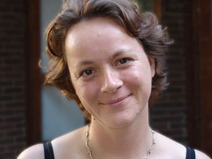
PictureClare
My former wife Clare was diagnosed with MND in September 2006. Our children, Jack and Ben, were 10 and 7 years old at the time of her diagnosis. She passed away on 19th February 2007 a few months before what would have been her 40th birthday. In her dying days Clare helped to establish the foundations for my future happiness and me, Jack and Ben are now part of a wonderful fused family of six along with my wife Julie and Julie’s children John and Isobel. I have put together this blog series, based on correspondence during and since Clare’s illness with the intention of communicating the positive aspects of the journey after diagnosis – the warmth between those chilling ice bucket moments. 
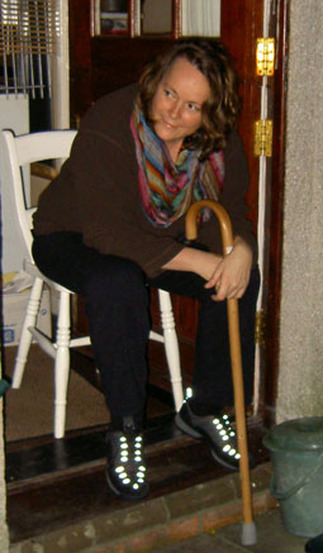
PictureOctober 2006- reduced mobility but still active
If this blog helps others who have found themselves in similar circumstances then I am really grateful. If people take offence at what I say, or how I say it, then I am truly sorry as no offence is intended. Everybody’s experiences are unique, a uniqueness that is compounded by the fact that we interpret our life's events through our own individual lenses. So although I sometimes attempt to draw conclusions from my experience, these are simply my interpretations. 

I have kept the focus principally on the adults in this story out of respect for our children’s privacy. But, suffice it to say that their welfare has to come first even though they cannot be insulated from painful circumstances. Every son or daughter hurts massively when losing a parent to a ghastly disease; but it is especially difficult when they are young and dependent but old enough to understand. I would be happy to discuss our experience privately with parents facing a similar situation. Just send a message in the Contact Me section and I’ll be in touch.

Clare, Jack, Ben and I were living in Kenya in 2006. In May of that year Clare twisted her ankle while walking in the Mount Kenya area. The ankle resolutely failed to heal. She was also becoming more and more easily tired from day to day exertions ("knackered and grotty" as she so eloquently put it). Nothing serious as far as I knew but unbeknownst to me Clare was becoming very concerned. We were on holiday in UK during the summer of 2006 when Clare stumbled several times for no apparent reason. After seeing a doctor it was pretty clear that there was cause for concern. Clare stayed in UK for tests while I returned to Kenya. In September the icy water dropped and Clare received the diagnosis of MND. Her life had been turned upside down. 

Clare and I have always been optimists of the incorrigible variety. Our cups are half full, crises are opportunities, losing your job is a career break - you get the picture. We knew that Clare’s condition would deteriorate but we had hoped that the process would be slow. Those hopes were in vain and Clare’s light faded rapidly as autumn turned to winter. 

Those months tested our optimism to breaking point. MND relentlessly and systematically robbed Clare of things that most of us take for granted – first her ability to walk, then to drive, then to write, then being able to stretch. Soon she was no longer able to hold a cup, or scratch an itch, or give somebody a hug, and eventually her voice left her. Every liberty lost was a mini death; a source of grief both in itself and for the fact that it presaged her inevitable and all too imminent death. And the grief flowed by the bucket load. But every single time the anger, despair and frustration from each liberty lost was transformed into acceptance – not fatalism, not resignation but acceptance of the situation in which she found herself. This allowed her to embrace life until the very end.

A few days before New Year Clare could no longer bear any weight on her legs. I bore the weight and I cracked. It was no longer OK. I couldn't put a positive spin on this anymore... But Clare could. “We’ll sort out more care, get a hoist to lift me in and out of bed, I’ll stay in the hospice for a day or two to give you a break and we’ll be fine and dandy” is the gist of what she said once those initial phases of grief had done run their course. And Clare was right; it was okay. She stayed in the hospice, not for a day or two but for five weeks - the final five weeks of her life. This period was to become one of our most precious times together. 

For some time since the diagnosis Clare had been convinced that she was not going to live for much longer. I continued to hope that things would stabilise. I had planned to contact loved ones who did not yet know about Clare’s condition once she was on this plateau. As the New Year approached it was clear that I could no longer afford to wait. At this point I wrote a letter to far flung family and friends to break the news. I did not want people to hear about things only after Clare had died. 

Even though it was hard to put the words on paper, I was so glad that I wrote that letter. Our loved ones responded with wonderful tributes to Clare, which I read to her as we shared her final weeks. In my opinion obituaries are wasted on the dead and in life we invariably forget to tell people how much we appreciate them. To be able to really know how much Clare was loved while she was alive was of massive comfort to both of us.

The letters, together with our long and tender conversations were very much part of the grieving process - letting go and surrendering to the inevitable fact that your time together on earth is coming to an end. This process actually began when Clare received the diagnosis. The fact that we had time and space to talk about the things that really matter in life - the love you share and the people you care about, as well as the day to day stuff like paying the mortgage or ordering name tags for the boy’s PE kits - helped me so much as I came to terms with life after Clare. I got a sense of how precious this time was through my communication with friends and relatives who reflected on the loved ones they had lost. Several people expressed their sadness about having their nearest and dearest snatched away without warning and not having the chance to talk to them properly. Others spoke of the gradual loss that comes with a degenerative mental disease. MND does many things but it does not take you suddenly, and it does not rob you of your mind. At least it gives you some time and you can communicate authentically to the end. It gives you permission to say goodbye. 

Shortly after my update to family and friends Clare wrote her final letter dictated to me through tears and smiles. She spoke of her appreciation of Weston Hospicecare and everything they did to make things as good as possible in the circumstances, the challenges faced by the family in coming to terms with her death and her fear of the unknown.

I continued to write mainly because those who had sent their wishes, and (as I was to find out later) those who could not bring themselves to write, wanted to share Clare’s journey; and to help us feel a sense of connection. But I also wrote for myself, as a way of processing – to help me to crystallise my feelings and lighten the weight I felt whenever I kept things bottled up inside.

The hospice environment, created by its amazing staff, gave us the time and space to explore the emotional peaks and troughs and seemed to provide Clare with a new lease of life. Visitors poured in and for a while there was a party atmosphere in Room Number 3. It almost felt like Clare was in the hospice under false pretences, and I began to dream of the plateau again. But the disease never relented and soon Clare’s spirit could not overcome the dictates of her body.
Picture
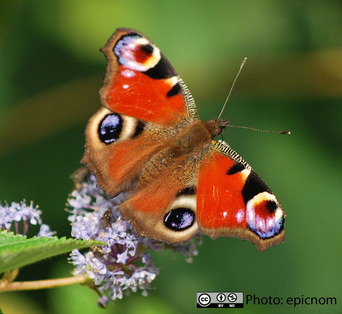
After a Valentine’s morning to remember, Clare began the final leg of her earthly journey. At this point her voice lost its power. She did not need it any more. It was a period of great physical distress but she could now finally let go. A few days later she died and her spirit emerged from its cocoon. Clare, the beautiful butterfly, knew that she had done all that she could to help me, Jack, Ben to continue on our paths together.

In those final weeks and months Clare and I discussed pretty much everything of relevance to our lives, and the imminent reality of her passing, even to the point of planning the funeral to the last detail. I hope this doesn't sound morbid or paradoxical but thinking about the music, the readings and flowers was actually an incredibly moving and life-affirming process. And the fact that we had planned it together helped to give me the energy to organise the process in the certainty that I was helping to implement Clare's wishes. A small recompense I know, but helpful nonetheless.

In the days that followed the funeral, with our friends and family scattered to the four winds, it was just me, Jack and Ben. The boys really helped me; I had a focus, a raison d'être, a responsibility that was bigger than me. I had very little time to wallow in the proverbial slough of despond. As all fellow parents know, there are things that just have to be done when you have small, or even not so small, dependent children. There are the manifold tasks that serve to stave off entropy and then all the other stuff that goes under the heading of enhanced quality of life. These imperatives provided me with a direction that may not have been there had I been a one-man-band; which is the case for so many of those who lose their partners.

But after the entropy has been postponed for another day, tummies have been filled and fun stuff has been done, there is a huge gap in one’s life that can be labelled “partner”, “soul mate”, “head for one’s shoulder”, etc. Clare was well aware that I would need that special somebody in my life after she was gone and in her final weeks she was on a mission to sort out my future emotional wellbeing! Her matchmaking efforts and my resistance to them made for much hilarity in the hospice in those surreal final days!! But Clare was right, I would need to find love again and I am so grateful that she gave me her blessing.

I cannot imagine life without the Internet but I had never envisaged the pivotal role that it would play in contributing to my future happiness. As a single father with two dependent children, my freedom to seek out that special person would have been extremely limited in those bygone days. But with the plethora of internet dating agencies out there, offered at least the possibility of finding that somebody, even if the search was likely to take some time. So I took the plunge and steeled myself for what I envisaged would be a long and rocky road ahead. Incredibly, within only three weeks of subscribing to a dating agency I met Julie, and found myself falling head over heels in love with this wonderful woman … and meanwhile she was falling in love with me!!! I had heard a lot of horror stories about internet dating and I am sure that they are not exaggerated. Clearly Julie and I are among the lucky ones. I can only put this down to the fact that somebody up there likes us!

Although Julie and I were sure that we wanted to be together we both had dependent children – Julie’s children, John and Isobel were 10 and 6 respectively when we met while Jack was nearly 11 and Ben was now 8. So we had to do our best to ensure the children's welfare was best served in the process of fusing two families. This has not been without its challenges, and for reasons previously stated, I don’t want to go into too many details. Suffice it to say it was critically important that Julie shared such a strong love and a burning desire to make things work for everybody. Over the years our group of six has become as solid a family unit as anybody could wish for despite our different backgrounds.

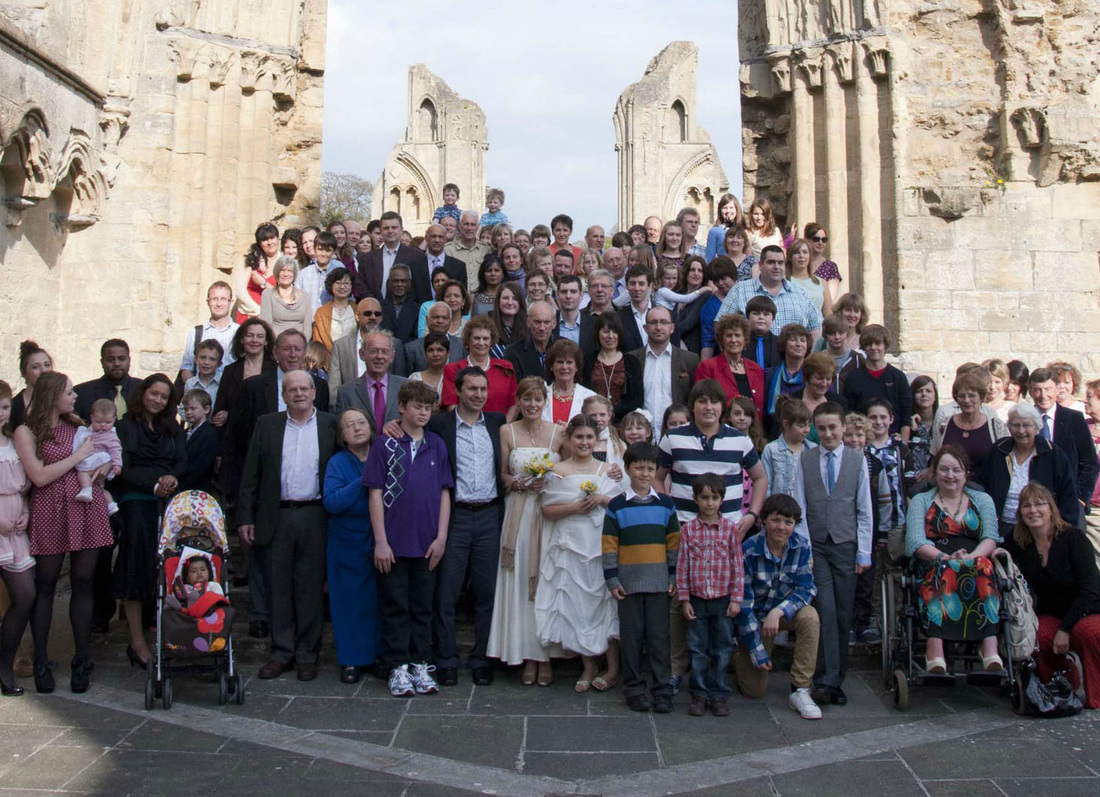
On Friday 13th April 2012 Julie and I got married in Glastonbury, the place where we met. All sides of the family were there including Clare’s folks and Julie’s ex-husband. I am not pretending that everything has been plain sailing but Clare’s determination that I should rebuild my life and the support of our families and friends has been a massive help… thank you! 

Donations and Clare's Tribute Fund
Without the help of the Motor Neurone Disease Association and Weston Hospicecare  our lives would have been so much more difficult.  Both organisations rely on volunteers and donations so anything you can spare would be gratefully received.

Clare’s mother Sue-Jane has set up the Clare Viva Towner Mauremootoo Tribute Fund. All money donated goes to the Motor Neurone Disease Association.

0 Comments

Ice Bucket Reflections: Clare has Motor Neurone Disease - Extracts from a Letter to Family and Friends

31/8/2014

0 Comments

 
Sorry that this general letter is not full of seasonal cheer. To say that 2006 has been a bad year for the Mauremootoo family is an understatement to put it mildly.

Clare has motor neurone disease and her health is deteriorating very rapidly.

I have tried and tried to come up with less stark ways of phrasing this but, as you can see, I have utterly failed. Sorry for the impact of these words if you were not already aware. This particular pill is not easily sugar-coated.

Motor Neurone Disease: Dictionary definition “degeneration of the nerves in the spinal cord and brain that are responsible for muscle movement, causing weakness and muscle deterioration”. My definition: “a hurricane that rips your existing reality into tiny pieces leaving behind a new landscape composed of the fragments of your former life together with new and unfamiliar elements brought in by the storm”.

We are in the process of trying to assemble these pieces into a new reality while attempting to keep things together on this ever-changing landscape created by a “constant companion” that chips away at Clare’s faculties, though mercifully leaving her essence untouched. 
PictureMount Kenya
The first signs of the impending hurricane came in May 2006 when Clare twisted her ankle while walking in the Mount Kenya area [we were living in Kenya at that time]. The ankle resolutely failed to heal. In the meantime Clare became increasingly exhausted by the slightest exertion. We put it down to a pre-existing thyroid condition. However, by the time we went on leave to UK in July it was clear that Clare’s levels of fatigue could not be explained away so easily.

I left for Nairobi with Jack & Ben in mid-August while Clare went for tests to get to the root of the problem. There is no test for MND so diagnosis comprises of cataloguing the symptoms and testing for other possible causes of the symptoms (MS, cardiac conditions, cancers of various kinds, etc.). I was initially convinced that though serious, Clare’s condition was something that could be solved by a pill of some sort and perhaps a bit of a lifestyle change. That was more a consequence of the rose tinted specs I like to wear than any blinding flashes of medical insight. Clare wears similar specs as a rule but was somewhat better informed than me: a.) because she was feeling what she was feeling; b.) because her aunt had died of MND; and c.) because she had read extensively on the subject. The diagnosis for MND is a process of elimination and as ailment after ailment was eliminated Clare became more and more convinced that it was MND. The rose tint faded.

Picture
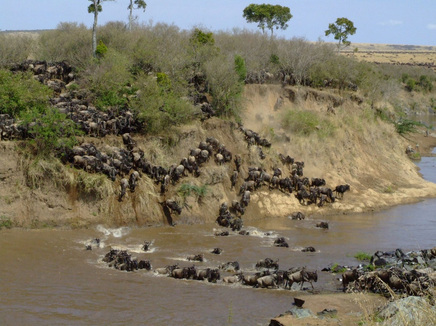
Whatever the diagnosis, it became increasingly clear that we would need to return to UK for Clare to get the appropriate levels of care.  Pity the majority of people in the world should they get such a disease – no bolt holes for your average Kenyan. Jack, Ben and I used our last weeks in Kenya together profitably – “giving the kids memories to last a lifetime” I called it – great railway journeys of the world – third class on the finest commuter trains in Kenya!; Amboseli for the swamp elephants and the last vestiges of Kilimanjaro’s famous snows; Maasai Mara for the wildebeest migration [six hours of wildebeests which Ben still remembers as among the most boring experiences of his life!!!]. 


We hoarded those planned memories plus a few unplanned experiences – notably a turned over Land Rover on the road to Amboseli. Fortunately no major damage was done though it was a wee bit nerve racking at the time to say the least!!

Armed with our memories, good and bad, an assortment of clothing and our rucksacks, the three of us returned to UK in September to stay at Clare’s Mum's while we looked for a home of our own. Within two days Jack & Ben were in a new school. The boys of course were massively affected but are showing a resilience that I hope will continue to stand them in good stead.

Life for us in a single room the size of the proverbial shoe box was challenging but we managed; as do a large percentage of the world’s population – in case you wondered, I mean that a large percentage of the world’s population live in cramped conditions (and for considerably more than six weeks at a stretch) and not in Clare’s Mum’s spare bedroom!

We moved into our new home on 5th November which was followed by a manic period of getting house stuff together – the usual new home headaches with the added challenges thrown up by our constant companion – air-bricks and joists together with stair lifts and hoists.

During that time I went to Nairobi to sort out some work things. As you can imagine work had been taking something of a back seat over this period. To rectify this situation I attempted to squeeze a couple of months work into a fortnight and sell, give away or ship out the contents of our house in Kenya into the bargain. The house stuff worked pretty well but inevitably the work stuff did not. I had been relying on Parkinson’s Law to get me through but Newton’s laws proved more powerful. Simply stated “you can’t fit a quart into a pint pot” – all of this has had multiple, complex & interacting consequences.  

A part few strands of this tangled web are summarised below:
  • Cause – too much stuff to do and not enough time in which to do it
  • Effect – business as usual not possible
  • Consequence – need to find another way to earn a crust
  • Some fundamental restrictions - must work from home, needs to be part-time, can travel but not much anf not for extended periods 
  • Current status of job search – no progress. 

I got back from Kenya to find that Clare’s condition had, in contrasted “progressed” considerably... And there has been no let up since. The only way is down for those with MND. However the rate of deterioration can decrease and things can even plateau in some cases. Simple extrapolation gives little cause for optimism. Fortunately extrapolation is not prediction so we remain hopeful. As I write Clare is completely dependent on help for even very slight movements, suffers near constant pain and speaking and eating is becoming increasingly difficult.

PictureStephen Hawking (Wikimedia Commons)
Initially we had hoped that Clare would take the Stephen Hawking path. Unfortunately, we pretty soon learned that the world’s most famous MND sufferer is the exception to almost every rule. In most cases the disease progresses much more quickly than it has for Hawking. Tragically Clare seems to have slid down the wrong side of the Bell Curve – like Hawking she is an outlier but of the opposite kind.

In spite of it all, Clare remains a living embodiment of new age clichés – “surrender to your fears”, “live this day as if it is the last day of your life”, “see the beauty in all things”, etc., etc. Inevitably the poetry is frequently punctuated by good old Anglo-Saxon prose – those “it’s fucking crap” moments and phases, but all in all Clare is coping amazingly well. There are many other silver linings in that huge black cloud. Among them are the NHS, social services and the Motor Neurone Disease Association who are all doing an amazing job, the wider family has been brought closer together, we have been helped in numerous ways by family and friends, and last but not least Clare’s mental faculties are (and will remain) unaffected by this otherwise hideous disease. 


Inevitably the events of the last few months have been the cause of much reflection. Clare is very positive about the life she has led to date. She has seen and done a great deal and in the process, has touched many people’s lives. That is a fantastic legacy to leave. She will continue to build on this positive legacy for the rest of her life. Regarding the future, I think the phrase used to describe the loss of a loved one with  Alzheimer’s disease - “the long goodbye” are apposite, although of course the context is very different. We do not know how long Clare’s life will continue but we do know that it is extremely unlikely that she will reach the biblical three score years and ten. Unlike those with Alzheimer’s, Clare will maintain her mental faculties to the end. This gives us a great opportunity to put all of her affairs in order before she leaves us in body; and to stock up the vaults of our collective memory banks with riches that we can draw upon in the years to come.

Wishing you all a positive and fulfilling 2007,

John


Donations and Clare's Tribute Fund
Without the help of the Motor Neurone Disease Association and Weston Hospicecare  our lives would have been so much more difficult.  Both organisations rely on volunteers and donations so anything you can spare would be gratefully received.

Clare’s mother Sue-Jane has set up the Clare Viva Towner Mauremootoo Tribute Fund. All money donated goes to the Motor Neurone Disease Association.
0 Comments

Ice Bucket Reflections: Clare’s Letter to Family and Friends

31/8/2014

0 Comments

 
Dear family and friends,

I thought you might like an update from me now that I have been in the Weston Hospicecare hospice for two weeks. I have found it a wonderful place to be and I had a real surge of energy when I came here. I think this was partly due to the relief of knowing that I will have the care that I need without burdening my family but also because the hospice is just such a loving, gentle place. Being cared for by the team of staff here is often like having my old friends gently and lovingly nurturing me. I feel truly blessed to be here. My room looks out on to a pretty garden with a bird table placed just outside my window as if they knew before I came that I am a real fan of nature. Everything is given loving attention here. My food is presented on lovely plates and in beautiful cups with my own personal salt and pepper pots and a quality serviette. The bed cover is a beautiful piece of hand quilting and even the pins on the pinboard are pretty little forget-me-not flowers. I have been encouraged to do whatever I like to the room to make it feel like home. I asked John to print off a few A4 size portraits of the boys and family to put on my cupboard. In his usual exuberance he printed me 40 pictures which we have used to decorate two of the walls in a giant gallery of memories. I have also had a continuous supply of fresh flowers. Currently I have three enormous vases of all colours of the rainbow. It’s a real treat.

The other day I had a new adventure when my funky chunky wheelchair arrived. To say that it’s laid back is the best description. Makes it quite hard for John to steer it around without whacking the furniture but then he loves a challenge doesn’t he!! John took me on a tour of the hospice and I was amazed to see how big and how beautiful it was. There is a stunning view from one of the lounges up a pretty hill to an old church and from the garden you can see badgers and foxes in the evenings. There is also a lounge which has games and entertainment for kids which makes it really nice and relaxed when our boys come to visit. Favourite of course is the Play Station 2. I’m not sure that computer game bribery is the best way to get the kids to see me but it works.

My favourite room in the hospice is the chapel. It has a stunning stain glass window and a beautiful cross made of driftwood, Indian cushions decorating the chairs and a large crystal ball where you can float offering candles. It’s a really serene, gentle place. John and I enjoyed just being there talking and reading letters for a while. Once I have got a bit more energy I will go back again and light a candle.

These past few days I have been feeling pretty tired. My room was full of visitors for much of the time for the first few days that I was here. It is wonderful to be so loved though with time I realised that I have to ask people to write rather than visit because the time that I have is precious; I need to rest a lot and the time that I have I need to give to my closest family.

The doctors here have been gently hinting at this for a few days before John and I realised that was what I needed to do. Sorry that this is difficult for some of you but I promise that your love and support are coming through strong and shining through the fantastic letters that we have received. I feel so loved and supported by this. Thank you all.

John and I are at last able to relax together and enjoy being a loving couple thanks to the hospice. When I was at home it seemed that we had a full time job just managing the care that I needed. It really is a massive relief to be here.

The kids are beginning to get used to mum having her new home away from home. Ben brings in his latest drawing project and sits and chats by my bedside while he works, from time to time dashing over to check out how the different gadgets in my room work. It’s a joy to feel his boundless enthusiasm for exploring how the world works. Jack has found it more difficult to be here. I think because he is much more aware of what is happening to me. I have been very upset that he was distancing himself from me although I know it was just to protect himself. Yesterday we managed to resolve things by having another heart to heart and talking about the facts about my illness. I have always been astonished by Jack’s perceptiveness and his clear expressions of his emotions. Jack has led us through the difficult path of how to express what is happening by his intelligent and carefully spaced sequence of questions. I think when he realised that my death was coming sooner than we hoped that he just could not face it … not surprising. Yesterday we resolved things by talking openly about how things are now and it’s fantastic to have my gentle Jack being able to hug and kiss me and look into my eyes again.

I just realised that this letter has become quite sad. I had wanted to write something more upbeat to reflect the fact that I spend so much of my day smiling with joy, enjoying jokes, laughter and love with the people who surround me. It’s a happy place and I am really content here but of course it is transient and I am pretty scared if truth be told of the unknown future of my physical being. I just want to say thank you to everyone for surrounding me in love and support because I truly feel it in every moment.

Wishing you all love and peace

Clare

Donations and Clare's Tribute Fund
Without the help of the Motor Neurone Disease Association and Weston Hospicecare  our lives would have been so much more difficult.  Both organisations rely on volunteers and donations so anything you can spare would be gratefully received.

Clare’s mother Sue-Jane has set up the Clare Viva Towner Mauremootoo Tribute Fund. All money donated goes to the Motor Neurone Disease Association.
0 Comments

Ice Bucket Reflections: Clare’s Funeral – Tears and Laughter

31/8/2014

0 Comments

 
I was dreading the funeral for many reasons. I had no idea how I would feel: would I be overcome by grief, jabber on like an idiot to fill in embarrassing silences, or experience the numbness of the punch drunk? These feelings coalesced around my eulogy, to which I gave a significance that it did not deserve. I agonised over this in a way that I had never agonised over speaking in public before. Somehow I had got it into my head that whatever I said would have a lasting bearing on Clare’s legacy. After writing and rewriting my script for an inordinate amount of time I discussed it with Clare’s brother and sister the night before the funeral over a few drinks. Clare’s legacy was not something so fragile that it could be jeopardised by whatever I was to say at the funeral and we agreed that it would be best if I just said what came into my head at the time and read out the poem I wrote for Clare shortly before she died. That conclusion helped to ease my mind and prepared me for the day to come.
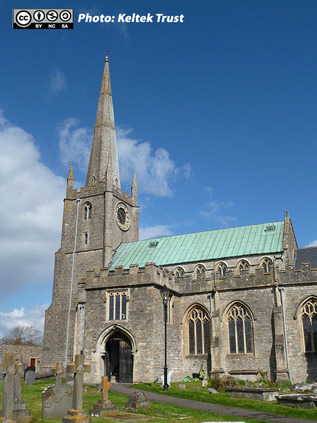
The funeral ceremony at Saint Andrew’s Church in Congresbury was beautiful – lots of tears and laughter and a packed church with friends and family from far and wide. It was an honour to read out Clare’s words she dictated to me a week before she died. The highlight for me was when Jack and Ben lit small nightlight candles from the main candle that had been burning since Clare’s body was brought into the church. It was a touching symbol of the light that Clare was in our lives and how this light lives on in all of us but especially in Jack and Ben.
Picture
The sun shone beautifully making the song “I Can See Clearly Now” by Johnny Nash (Clare’s “theme tune”) all the more appropriate. The other songs we played were “Tears in Heaven” by Eric Clapton and “The Greatest Love of All” by George Benson, songs that were very special to Clare. 

Clare’s body was carried from the church to the accompaniment of beautiful and uplifting Kenyan Gospel music. Clare’s body was buried just behind the boy’s school with the Mendip Hills as a backdrop. We scattered the soil on the wicker coffin in the traditional manner but with smiles as well as tears. Ben never wanted to stop scattering and got so close to the edge of the hole that I feared he was going to topple in. 
PictureSaint Andrew's Church
The family made a couple of large montages of photos of Clare in the hall. The boards provided a focal point and stimulus for memories that flowed along with the drinks. Clare’s Mum organised the catering and in the true family tradition there was food enough to feed 5,000. The bible reading was “the feeding of the 5,000” – a tribute to Clare’s legendary culinary capabilities, generosity and to the abundance of this world we live in. The kids were perfectly behaved throughout with Jack and Ben popping out for the occasional game of football.

It was a shame that I could not have spent more time chatting with everybody who had made the effort to be there but that is the nature of such an occasion. Fortunately many of those who came did get the opportunity to catch up with long lost friends. It is a shame that it takes a funeral to bring far flung friends together but Clare would definitely have been delighted that so many people said things like “I probably shouldn't say it but I really enjoyed the day.” The band, old friends from Clare’s university days, reformed for one day only, were excellent and much appreciated. The sound system struggled at times but I guess that made it all the more evocative of the old days. There was no dancing. No doubt there would have been had Clare been there in body rather than just in spirit.

After a couple of days it was just me, Jack and Ben. We can now find some kind of equilibrium. There is a lot of emptiness but also a lot of hope for the future. It will be the greatest challenge I have ever faced but I know that I will not alone in facing it and that helps immensely.

Donations and Clare's Tribute Fund
Without the help of the Motor Neurone Disease Association and Weston Hospicecare  our lives would have been so much more difficult.  Both organisations rely on volunteers and donations so anything you can spare would be gratefully received.

Clare’s mother Sue-Jane has set up the Clare Viva Towner Mauremootoo Tribute Fund. All money donated goes to the Motor Neurone Disease Association.
0 Comments

Ice Bucket Reflections: Rebuilding a Life, Finding Love Again and Fusing Families

31/8/2014

0 Comments

 
Needs left unfulfilled
The famous self-help guru Tony Robbins has identified the following six fundamental and interlinked human needs which everybody, knowingly or not,  attempts to meet in order to live a fulfilling life. They are:

1. Certainty: the assurance you can avoid pain and gain pleasure
2. Uncertainty/Variety: the need for the unknown, change, new stimuli
3. Significance: feeling unique, important, special or needed
4. Connection/Love: a strong feeling of closeness or union with someone or something
5. Growth: an expansion of capacity, capability or understanding
6. Contribution: a sense of service and focus on helping, giving to and supporting others.

Caring for a partner with a chronic disease fulfils all of these needs, although, of course, it is not a situation that anybody would consciously choose for themselves or for their loved ones.

Having small dependent children meant that all my needs did not go unfulfilled after Clare’s death. I had the certainty of the daily routine, a bit of variety, I felt needed and I found significance and contribution through my role as a parent. But as the dust settled it was clear that there were major gaps that would be difficult to fill. Of course there was and will always remain my massive and eternal love for Jack and Ben, but that is not the kind of love and connection you have with a partner; and although I was growing in certain ways I also felt contracted and stifled by the situation in which I found myself.
Picture
Matchmaking Machinations
Clare had anticipated my need for love and companionship in those weeks and months before her death and although Jack and Ben’s welfare was her number one priority, she was also very concerned for my well-being. She would regularly bring up the fact that I needed to find that special person after she had gone.

While Clare was living at home she did not have any tangible outlets for her matchmaking machinations. But this changed once she moved into Room 3 of the Weston Hospice. There were quite a few single nurses and carers; and Clare wasted no time in assessing their suitability for the post of the future Mrs Mauremootoo! When I came to visit in those first few days I could sense that I was under surveillance and I would often hear suppressed giggles as I made my way to Clare’s room. 

I knew Clare well enough to know the reason why. By doing what she was doing she was fulfilling some of her human needs in the best way she knew! When questioned, she confessed to her efforts to ensure my future happiness. We did not talk about much about it but Clare’s cupid impression continued unabated, even as her life force was failing. She was on a mission.

Joking aside, I did really appreciate the fact that Clare gave me permission to find somebody new. It was an act of generosity and foresight that does not come easily to everybody. The opposite attitude is illustrated in an extreme form in the Simpsons episode in which Homer has a triple heart bypass. Marge comes to visit him in hospital before the operation and the following dialogue ensues:

Homer: Now Marge, if the unthinkable should happen, you're going to be lonely.
Marge: Oh Homer, I could never remarry.
Homer: Darn right.  And to make sure, I want to be stuffed and put on the couch as a constant reminder of our marital oath.

Of course not many people in the real world are quite as forthright as Homer Simpson. But there is a feeling of guilt when looking for a new partner after a bereavement which must be compounded enormously if you feel that your former partner did not want you to move on. 

Picture
John
Picture
Julie
The dating game
As the months went by I began to feel the need for that special person. It was true that part of me was still in mourning for Clare. But I was expecting it to be a long quest so I thought it was better to start the first step of my 1,000 mile journey as soon as I had the strength. So I had the motivation but what about the means? As a single father with two dependent children, my freedom to seek out that special person would have, under other circumstances, been extremely limited. But by virtue of internet dating agencies there was at least some possibility of finding that somebody. I signed up to a site called Dating for Parents so that it was clear to anybody that I might meet that I was a fulltime parent and that Jack and Ben came as “part of the package” as it were.

 So I (North Somerset environmental consultant with two children – Jack 10 and Ben 8; short-medium height (depending on part of the world he is based in), athletic, brown eyes, interests – all things sporty, environmental, travel, occasionally sociable) took the plunge and steeled myself for what I envisaged would be the start of my three year search. One date came and went, then another and then there was Julie (Dorset nurse with two children – John aged 10  and Isobel 6; medium height, slim, blue eyes, interests - reading, good company, kayaking, walking with the dog, exploring historical places, socialising with the odd glass of wine … and with the odd person): my third such meeting and her first.
Julie
Julie and I met in Glastonbury (the town not the festival), situated halfway between our respective homes, on Tuesday 5 June 2007. It was a day that I will never forget, although the precise details are lost in a wonderful haze of love. It was one of those occasions when time stood still, when we just talked and talked and talked as if we had known each other forever. Our walk around Glastonbury town was pretty much as random and circuitous as any walk could ever be. I swear that we went around the same streets about 10 times, before finally finding ourselves on top of Glastonbury Tor without a clue as to how we got there. We were just completely absorbed in our bubble of love. That, plus the fact that both of us have a lousy sense of direction!

What can I say about Julie? She is probably the kindest and most loving person I have ever met. She has a passion for making the world a better place and a life that centres around caring for people – she is one of those people who immediately puts others at their ease. She was previously a midwife and had been working as a nurse on the Salisbury neonatal unit when I met her. She has since then diversified into a variety of caring and healing jobs and is now blazing a trail for EFT (Emotional Freedom Technique) a form of energy therapy. Julie sees the good in everybody, is adventurous, and profoundly spiritual yet is not over-earnest and zealous about all this deep, meaningful, worthy and potentially heavy stuff.

Legacies, letting go, merging families and playing the long game
Clare was still very present in my life in those early days, despite the fact that Julie and I we were deeply in love. I spoke about Clare a great deal and her legacy was everywhere in my house – photos, books, her artwork and so on. This was not always easy for Julie at the time when she, wrongly, sometimes felt second best. In a perfect world I guess Julie and I should have got together after more time had elapsed. All things considered, our romance was pretty unlikely. I was expecting a three year search, and Julie had not been long separated and only joined a dating agency because her friends had twisted her arm. So neither of us were anticipating finding a deep relationship at this stage. But I guess the universe had other plans for us. What is pretty clear is that given our circumstances, things could have never have worked if we did not love each other so much. Together Julie and I had found that perfect combination that helped us to meet those needs that were missing in our separate lives. We had found that union of two kindred spirits who could grow together as we explored our potential, and helped to contribute to the growth of those around us.

We had many hopes, dreams and aspirations, but one crystal clear objective stood out above all others – our desire to be together and merge our two families into one. The question was - How we could best achieve this taking into account the welfare of everybody concerned?

We may have found the perfect love but we were not a young couple who could just please themselves. I had two children, Julie had two children, Julie had her job, and John and Isobel had their Dad who lived close to them - a few of the very tangible things, all of which are collectively known as “baggage”.  Baggage is not a word I am very comfortable with, as it implies that your loved ones and the sum of your experiences represent something heavy – a kind of burden. I prefer the words “history” or better still “legacy”. But whatever word you choose, the fact of the matter is that me, Jack and Ben, and Julie, John and Isobel did not all come from the same family unit; and, other things being equal, this does make some things more challenging than they would be for a “conventional” family. So we ended up weighing up every major decision we made with the needs of all “stakeholders” in mind.

One of many examples concerned social gatherings. Initially, we probably tried too hard to engineer the “perfect family unit” - one in which you can’t see the joins. For example, we would always want all four children to participate fully in events organised by either my friends or relatives or by Julie’s friends or relatives. But it is actually OK if this doesn't happen. We took some time to learn that! We cannot deny that some bonds will be closer than others – this does not constitute a crisis but we sometimes thought that it did in those early days when we aspired to a kind of “family communism”. Paradoxically the less you try the easier things get and over time the family has actually become amazingly fused. We now have a shared history that is systematically becoming longer than our separate histories. The joins may still be visible but we are most certainly a family unit.

In family fusing, as in so many aspects of life it is best to play the long game. To fully appreciate how far you have come you sometimes need to stop, reflect and look back down the line. One of those days for reflection was Friday 13th April 2012 when Julie and I got married in Glastonbury - our special place. All sides of the family were there including Clare’s folks as well as John and Isobel’s Dad. It was a magical day in which Julie and I could publically celebrate our love and thank everybody who helped us along our journey. There have been a few ice bucket moments along the way and no doubt there will be a few more before we are done. But ice melts and it doesn't have to keep you frozen in time. 
Picture
Friday 13th April 2012: A Day to Remember
Donations and Clare's Tribute Fund
Without the help of the Motor Neurone Disease Association and Weston Hospicecare  our lives would have been so much more difficult.  Both organisations rely on volunteers and donations so anything you can spare would be gratefully received.

Clare’s mother Sue-Jane has set up the Clare Viva Towner Mauremootoo Tribute Fund. All money donated goes to the Motor Neurone Disease Association.

0 Comments

How I messed up my daily gratitude practice - Walking the tightrope between expressing appreciation and kidding ourselves

30/1/2014

0 Comments

 
Picture
I hope that my confession can help others avoid my schoolboy error so that they can tap into the power of an appreciative mindset.

From Marcus Cicero to Marci Shimoff, countless thought leaders over many millennia have spoken of the power of gratitude. One way of cultivating Cicero’s “parent of all virtues” is a daily gratitude practice. There are a few variations on this theme but the practice essentially boils down to listing a number of things that you are grateful for each day. It is a tried and tested way of developing our “appreciative muscles” – creating new neural pathways and strengthening existing body-mind connections to change our perceptions; so that we see ourselves, others, and our world in a better light. Numerous studies have demonstrated the benefits of gratitude in terms of increased life expectancy, improved health and many other indicators of an enhanced quality of life.

Some people explain the power of gratitude in terms of the law of attraction – your thoughts acting as magnets for life experiences; while others focus on the role of gratitude in shifting people from an unresourceful to a resourceful mental and physical state. Imagine, for instance, that your boss is unable to attend a meeting and they ask you, at short notice, to deliver a presentation in their place. If you are grateful for the opportunity you will be much more likely to benefit from the meeting than if you are resentful for the extra work load imposed. 

My wife Julie and I began our daily gratitude practice in April 2013 after Julie bought Jackie Kelm’s book, The Joy of Appreciative Living: Your 28-day Plan to Greater Happiness in 3 Incredibly Easy Steps. One of the steps is a daily gratitude practice in which you write down three things you are grateful for each day… Incredibly Easy???

Well... actually not very easy at all in my case. Pretty soon after starting the practice I was feeling considerably worse than I had felt before we had begun, which was obviously NOT the intended outcome!! Either something was wrong with the plan or the way in which we'd been implementing it. Initially I was convinced that the plan was at fault but it soon became clear that we hadn't been doing it right.  

When listing my three gratitudes I had been focusing solely on the obviously positive things – the weather is nice, our children are healthy, we have enough to eat, etc., etc. - typical motherhood and apple pie stuff. However, we both subconsciously steered clear of the “hidden gifts” that dwell in life’s more challenging situations.

With each passing day I found myself smiling through gritted teeth as my feelings of dissatisfaction bubbled and churned beneath the surface. We were doing all this “appreciative” stuff but we were still massively in debt, my consultancy contracts had dried up and I was not in perfect health... but I felt that I couldn't talk about these subjects because that would be "unappreciative"! This culminated in me quitting the “charade” in a fit of petulance on Day 14 as I tried, and failed, to envisage my joy-filled life!! In one fell swoop I had consigned Appreciative Living to the “nice but not for me” category.

I have to confess that I had not actually read Jackie’s book at this stage and Julie had only skimmed it, focusing mainly on Part Two “what you need to do” and not on Part One “what you need to know.” 
Picture
Following my tantrum, Julie read the book from cover to cover in order to gain a fuller understanding of what Appreciative Living was actually all about. I was a bit reluctant to follow suit but Julie gently persuaded me to give the process a “fair trial.”

In Part One Jackie explains, among other things, that every moment is replete with infinite possibilities and what we choose to focus on will become our experience – our map of reality. It was clear that gratitude actually means looking for the gifts in ALL situations; NOT drawing a veil over aspects of our lives that we wouldn't wish for in an ideal world - in other words not kidding ourselves.

Armed with our new understanding, we restarted the practice in May 2013 and looked for the joy in all situations. It was challenging at first, but with training our “appreciative muscles” progressively strengthened. Our daily gratitudes are now a firmly ingrained habit and they have helped to turn our lives around. We are now out of debt, my health is improving and I am being hired for lots of exciting work … much of it using the principles of Appreciative Inquiry, the organisational development paradigm that inspired Appreciative Living!!

The huge difference between gratitude and kidding ourselves was unclear to me back in April 2013 and my so-called “gratitude habit” actually ended up causing me more harm than good. Adopting an ostrich-like attitude to life’s challenges had left me vulnerable to some pretty powerful kicks in the rear end. But shining a light on the silver linings that dwell in every cloud, however small they appear to be at the time, has given me the strength to take action to deal with life's daily challenges as they arise rather than burying my head in the sand.

So while it is great to appreciate things when they are going well, the gratitude practice really comes into its own when it is used to address life's setbacks; because the excrement of life can then be turned into rich compost and used as the most potent of fertilizers for our growth.

0 Comments

Red Herring #5: Aliens! What’s in A-word? – Alien means extra-terrestrial and those species you talk about evolved on planet earth

18/8/2013

0 Comments


Picture
Nearly all earthlings know where we are from but there is this small group of humans who actually tell others that aliens are from Planet Earth!
Picture
In a nutshell

Red Herring #5: Aliens! What’s in A-word?


Consequences
Most people do not associate the word ‘alien’ with non-native species so the use of the 'A-word' adds a bit of unnecessary complication to an already complex subject; using the ‘A-word’ in awareness-raising efforts reduces their effectiveness; the term ‘invasive alien species’ (often abbreviated to IAS) is frequently used as a label for all invasive species, native and non-native alike which causes further confusion.

Suggested actions
Explain the nature of this red herring to experts so that they avoid the use of the word ‘alien’ when communicating with a lay audience.

The chances of anything coming from mars are a million to one” he said “The chances of anything coming from Mars, are a million to one ... But still, they come! Jeff Wayne, Eve of the War – part of the musical version of the War of the Worlds.

Red Herring #5 and its Consequences
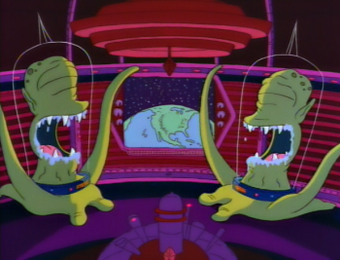
Upon hearing the word “alien”, most people conjure up an image of something extra-terrestrial – UFOs, ET or perhaps little green men such as Kang and Kodos from the Simpsons (as shown in the above cartoon). Perhaps they will whistle the Jeff Wayne’s ditty précised above. But, unless the person belongs to the small select world of biological invasions specialists, they are unlikely to think of… species introduced into new ecosystems directly or indirectly by people that increase in density and/or spread, to threaten ecosystems, habitats or species with economic, social or environmental harm!!

But even though the chances of anyone thinking of non-native species as aliens are practically a million to one … still they (the cognoscenti) come… to use the ‘A-word’. Unfortunately the term Invasive Alien Species (IAS) is with us now and it is not going away. So why do I feel so strongly about this “A-bomb?”

My first concern is that the use of the word alien causes confusion – a classic red herring. When the word alien is brought up for the first time during meetings I have facilitated, people inevitably talk about little green men; sometimes as a flippant aside, sometimes because they have an interest in extra-terrestrial life, and sometimes because they share my concern about the A-word being a red herring.

To be honest, such discussions are more water bomb than atomic bomb when you have a few minutes available for the bomb disposal process. My approach is to explain that the term 'Invasive Alien Species' is widely used in the discipline so we need to be aware of its existence. I then introduce my preferred alternatives such as 'exotic invasive species', a term I don’t care that much for either - because the word exotic conjures up stereotypically positive images (smiling twenty-somethings sipping piña coladas while lounging in a hammock under the tropical sun, … you get the picture), or 'non-native invasive species' – my personal preference. But ideally I would simply use the term 'invasive species' to which you can add non-native or native whenever pertinent (more on that later).

Job done? Well not quite. The problem is that the A-word is so ubiquitous in the scientific literature that it ends up being passed on unadulterated when communicating with non-experts. Without an explanation of the kind given above, the previously contained red herring can once more rear its ugly head. The narrator Edward Norton uses the term invasive alien species throughout the National Geographic documentary Strange Days on Planet Earth – Invaders, a programme targeted at a lay audience. Postings from those who were clearly confused and distracted by the A-word peppered the comments section of YouTube.  Typical comments included I think they need to be careful when calling plants "aliens" because ... plants aren't aliens....., and I didn’t know termites were from another planets and there invading human civilization using highly complicated military tactics. Oh wait.” And “wtf with the term alien, dude. They evolved within this planet not from outer space...get it?

Things can get even more confusing when the word 'alien' is translated into different languages. Believe me; I have seen invasive alien species translated into les espèces envahissantes extraterrestres in the francophone world!!

My second, related, concern is the way in which the term invasive alien species or IAS has been used as a label for all invasive species, whether they are native or introduced. This is related to Red Herring #4 (Concern about species introductions is essentially racism) and the fact that some invasion biologists appear to pay insufficient attention to native species that can become invasive. In some cases it is necessary to distinguish between native and non-native invaders as this affects management. For instance, prevention at the national level will not be a part of the management toolkit for native invaders!

Some suggestions for addressing Red Herring #5
We are stuck with the A-word in certain quarters but it doesn't mean we should use it when communicating with lay audiences. Let’s try to raise awareness among experts of the fact that the word aliens does not work with the other 99.something percent of people who are not immersed in the world of biological invasions. Most biological invasions awareness-raising products produced nowadays do not use the A-word, which is encouraging. Explicit recognition of Red Herring #5 will help to reinforce this trend so that any references to 'aliens among us' are safely contained!
0 Comments

Red Herring #4: Concern about species introductions is essentially racism - Species introduction, like human immigration, is a positive thing and those who advocate managing the process are eco-fascists

13/8/2013

0 Comments

 
Picture
The Nazi drive to eliminate non-native plants was motivated by racism. But be careful not to jump to erroneous conclusions. To paraphrase Dan Simberloff, all Italians who strive to make the trains run on time are not Fascists! (image: German Federal Archive)
Picture
In a nutshell
Red Herring #4: Concern about species introductions is essentially racism 


Consequences
Even the smallest suspicion of racism can damage anybody’s reputation; the perception that those concerned about biological invasions are against all species introductions creates antagonism; some feel that invasion biologists emphasise non-native invasive species but pay little attention to native species that can become invasive.

Suggested actions
Apologise for the groups who have demonised introduced species as part of a racist agenda; be careful not to use language that could be interpreted as racist when communicating about biological invasions, emphasise the fact that you are not against species introductions but are in favour of a precautionary approach based on risk analysis; don’t ignore native species that can become invasive. 

Below are some excerpts from articles about biological invasions: 
  • “The survey is not even halfway done, yet it has already revealed a disturbing trend: immigrants are forcing old-timers out of their homes.” (Stewart 2001)
  • “U.S. Can’t Handle Today’s Tide of Immigrants” (Yeh 1995)
  • “Congress Threatens Wild Immigrants” (Weiner 1996)
Is it just my imagination or do these quotes sound ever so slightly racist?

The above snippets are carefully selected and devoid of context. As we all know, the devil can quote scripture for his own ends. I am as guilty as anybody when it comes to searching for catchy hooks and headlines to attract an audience… but we have got to be careful!

Critics can and do gleefully seize upon quotes such as these and use them as sticks to bash those who are working to mimimise the impacts of biological invasions. Banu Subramaniam (2001) argues that “the battle against exotic and alien plants is a symptom of a campaign that misplaces and displaces anxieties about economic, social, political, and cultural changes onto outsiders and foreigners.” - A serious accusation indeed, which is particularly ironic as so many of those working in the on biological invasions hold politically liberal views.

Unfortunately there have been well-documented links between the love of indigenous landscapes and extreme right wing views that we cannot bury under the carpet. Daniel Simberloff (2003) outlines this sorry history in detail, but this does not, mean that those who care about indigenous landscapes should be assumed to be racist! As Simberloff states the Nazis opposed introduced species, and that they related this agenda to their campaign to rid Germany (and perhaps the rest of the world) of people they considered foreign and inferior, need not mean that everyone who opposes introduced species does so for xenophobic, racist motives. However, muck has a nasty habit of sticking and any association with racism can only weaken the cause of those who seek to manage species introductions.

Some folks who would like to equate concern about biological invasions with xenophobia have correctly pointed out that introduced species per se are not ‘baddies’. The world’s agriculture is based on a handful of plants such as rice (native to Asia and certain parts of Africa), wheat (native to the Middle East), maize (native to the Americas) and soya (native to East Asia), all of which have been introduced beyond their native range; with massive benefits. And most introduced species do not become invasive. The ‘tens rule’ for non-native plants states that of ten per cent of introduced non-native plant species establish in the wild, and of these, ten per cent become invasive (Williamson 1993, and Williamson & Fitter 1996). This rule is far from cast-iron but the message is clear – the large majority of introduced species will not cause serious damage in their new homes.

Unfortunately, it is very difficult to predict which species will become invasive in what situation. And the stakes are very high as it is much more difficult to control a species once it has established than to keep it out in the first place. Although invasion risks are usually low, the potential impacts are high. Hence invasion biologists tend to advocate a precautionary approach to new species introductions - If in doubt keep it out! I guess this can sound pretty xenophobic if you don’t know the full story!

The flip side of this is that not all native species are ‘goodies’. Native species can become invasive too. You can be sure that a farmer in Senegal who has lost an entire sorghum crop to native desert locusts or a cattle herder in Nigeria whose land has been rendered useless by native bracken fern does not care where these species hail from. Invasion biologists focus on introduced species for very good reasons (see my posting on Red Herring #3 for an explanation). But, in our well-intentioned efforts to keep out suspected baddies we may neglect the “enemy within” and underplay the potential invasiveness of native species under certain circumstances. Thus, once again, we open ourselves to accusations of xenophobia.

Some suggestions for addressing Red Herring #4
It’s more difficult than my suggested response to Red Herring #3 (‘It’s only natural’) because the xenophobia accusation concerns several issues: Concern for introduction equates to racism; introduced species are good; and you are only worried about introduced ‘baddies’ are those I have highlighted here. My suggestions are outlined below, but I am sure that they are not the last word, given the complex nature of this particular red herring:

We need to acknowledge the fact that some individuals and groups have conflated a love of indigenous species and landscapes with racist or extreme nationalistic viewpoints. We should apologise on behalf of these people but this chequered history does not mean we should relinquish our right to care about native species and ecosystems.

We need to carefully choose our words so that they cannot be twisted to makes it appear as if we are acting from racist motives. I know many people recoil at such ‘political correctness’ but, for better or worse, we are judged on our words even if those words are stripped of their original context.

We need to make it clear that most introduced species are not problematic and we do not advocate closing the doors on future introductions. However, the precautionary principle dictates that we cannot simply introduce any species into any area without some form of risk analysis. Advocating a systematic risk analysis process is not xenophobic.

We need to acknowledge that native species can become invasive. Ultimately our concern is the balance between positive and negative impacts and not the place of origin of the species.

Last but by no means least, we must clearly communicate that our major concern is the fact that biological invasions can cause huge and unintended negative social, cultural, economic and environmental impacts. It is all about context; a species can have positive impacts in some situations and negative impacts in others. We need to embrace this complexity which cannot be dumbed down to native good, introduced bad!!

Coming up next: Red Herring #5: Aliens! What’s in A-word? – Alien means extra-terrestrial and those species you talk about evolved on planet earth.

References
Simberloff. D. (2003). Confronting introduced species: a form of xenophobia? Biological Invasions 5, 179–92.

Stewart, B. (2001). The Invasion of the Woodland Soil Snatchers. New York Times, April 24, 2001.

Subramaniam, B. (2001). The Aliens Have Landed! Reflections on the Rhetoric of Biological Invasions. Meridians: Feminism, Race, Transnationalism 2(1), 26-40. Indiana University Press. 

Weiner, H. (1996). Congress threatens wild immigrants. Earth Island Journal 11, no. 4.

Williamson, M. (1993). Invaders, weeds and the risk from genetically modified organisms. Experientia, 49, 219-24.

Williamson, M. H. & A. Fitter (1996). The characters of successful invaders. Biological Conservation 78, 163-170.

Yeh, L. (1995). U.S. can’t handle today’s tide of immigrants. Christian Science Monitor 87, no. 81.

0 Comments
<<Previous
Forward>>

    John Mauremootoo

    John Mauremootoo is a consultant with over 30 years of experience in diverse aspects of international development.

    Archives

    July 2025
    February 2024
    October 2017
    September 2017
    September 2015
    August 2015
    May 2015
    January 2015
    August 2014
    January 2014
    August 2013
    July 2013

    Categories

    All
    Aliens
    ALS
    Appreciative Inquiry
    Appreciative Interviews
    Appreciative Living
    Biological Invasions
    Bounded Rationality
    Centre For Pollination Studies
    Certainty
    Chris Anderson
    Christopher Makau
    Circadian Rhythms
    Cognitive Biases
    Communication
    Complexity
    Connection
    Conservation
    Contribution
    Data Visualisation
    Decision Making
    ​Dopamine Replacement Therapy
    EFT
    Emotional Freedom Techniques
    Empowering Questions
    End-timers
    Exercise
    Facilitation
    Fasting
    Gratitude
    Growth
    Hans Rosling
    Hedonic Treadmill
    Heroes
    Hesitation
    Hope
    Humble Project Management Toolkit
    Ias
    Ice Bucket Challenge
    Inspirational Stories
    Introduced Species
    Invasive Alien Species
    Invasive Species
    Kenya
    Ketogenic Diet
    Kibera Tv
    Learning
    Love
    ​Magnesium
    Massage
    Meditation
    Misanthropy
    Mision
    Mission
    Motor Neurone Disease
    Nazism
    Optimism
    Organisational Development
    Osteopathy
    Outcome Mapping
    Ozone Therapy
    Parkinson’s Disease
    Parkinson Voice Project
    Perfectionism
    Personal Development
    Planning Fallacy
    Politics
    Procrastination
    Project Management
    Racism
    Red Herring
    Significance
    Six Human Needs
    ​SPEAK OUT! Therapy
    ​Speech Therapy
    Stakeholder Consultation
    Statistics
    Sustainable Land Management
    Systems Approaches
    Tapping
    TED Talk
    The Complement Sandwich
    The Secret
    TIDEWID
    Training
    UK General Election 2015
    Uncertainty
    Vision
    Win-Wins
    WOOP
    Xenophobia

    RSS Feed

Picture
www.inspiralpathways.com
Welcome
Conservation
Blog
Books
Facilitation, Training & Communication
PME (Planning, Monitoring and Evaluation)
Testimonials
Contact me